
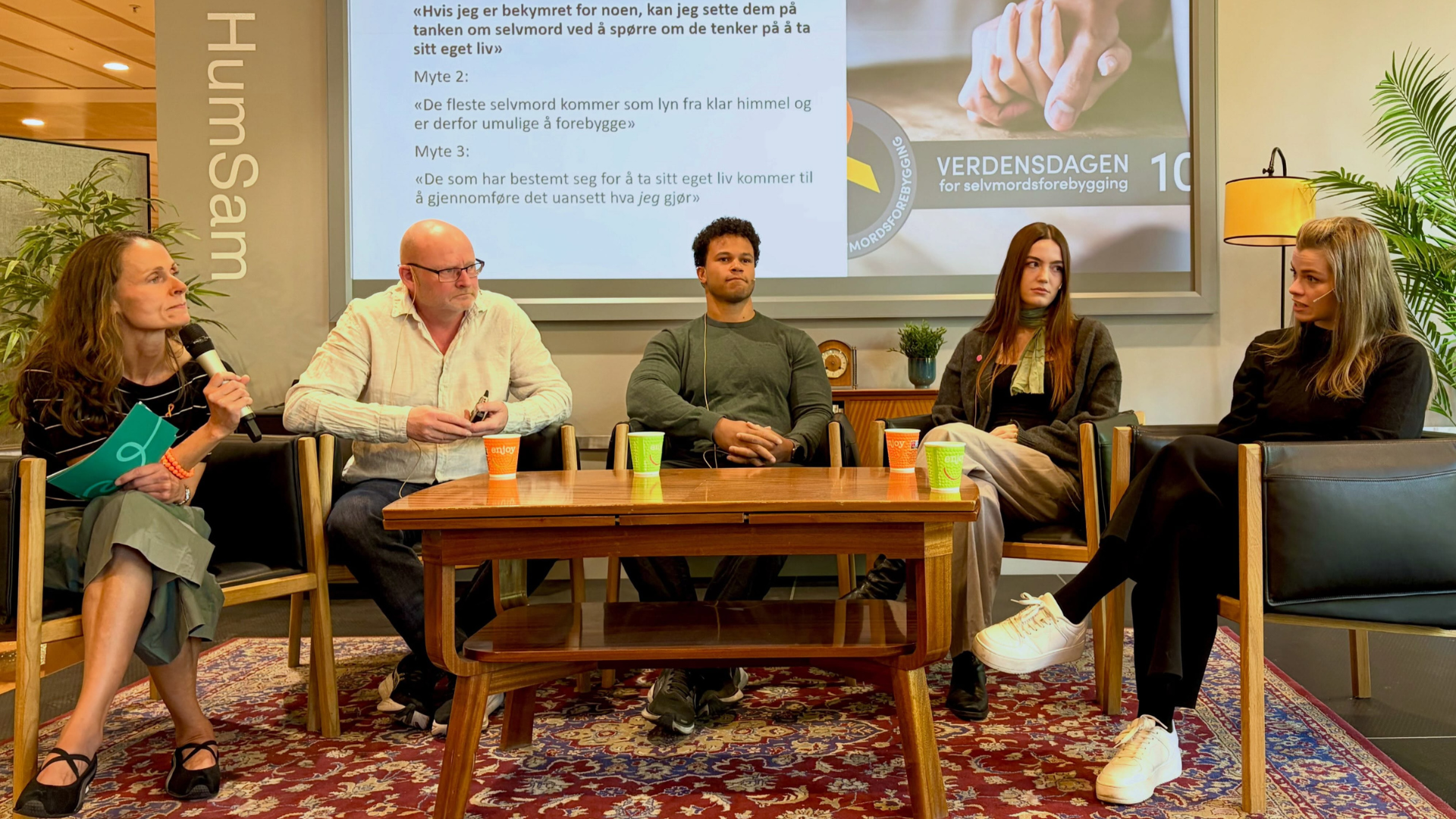
In this year's panel discussion were Anna Bergum Furset, leader of the Student Parliament; Hanne Solheim from unge LEVE; Aslak Alhassan from the Workout Joy project at SiO; Knut Oftung, policy director for men and gender equality at the Equality and Anti-Discrimination Ombud; and Birgitte Fredriksen from the chaplaincy at UiO.
Dare to ask
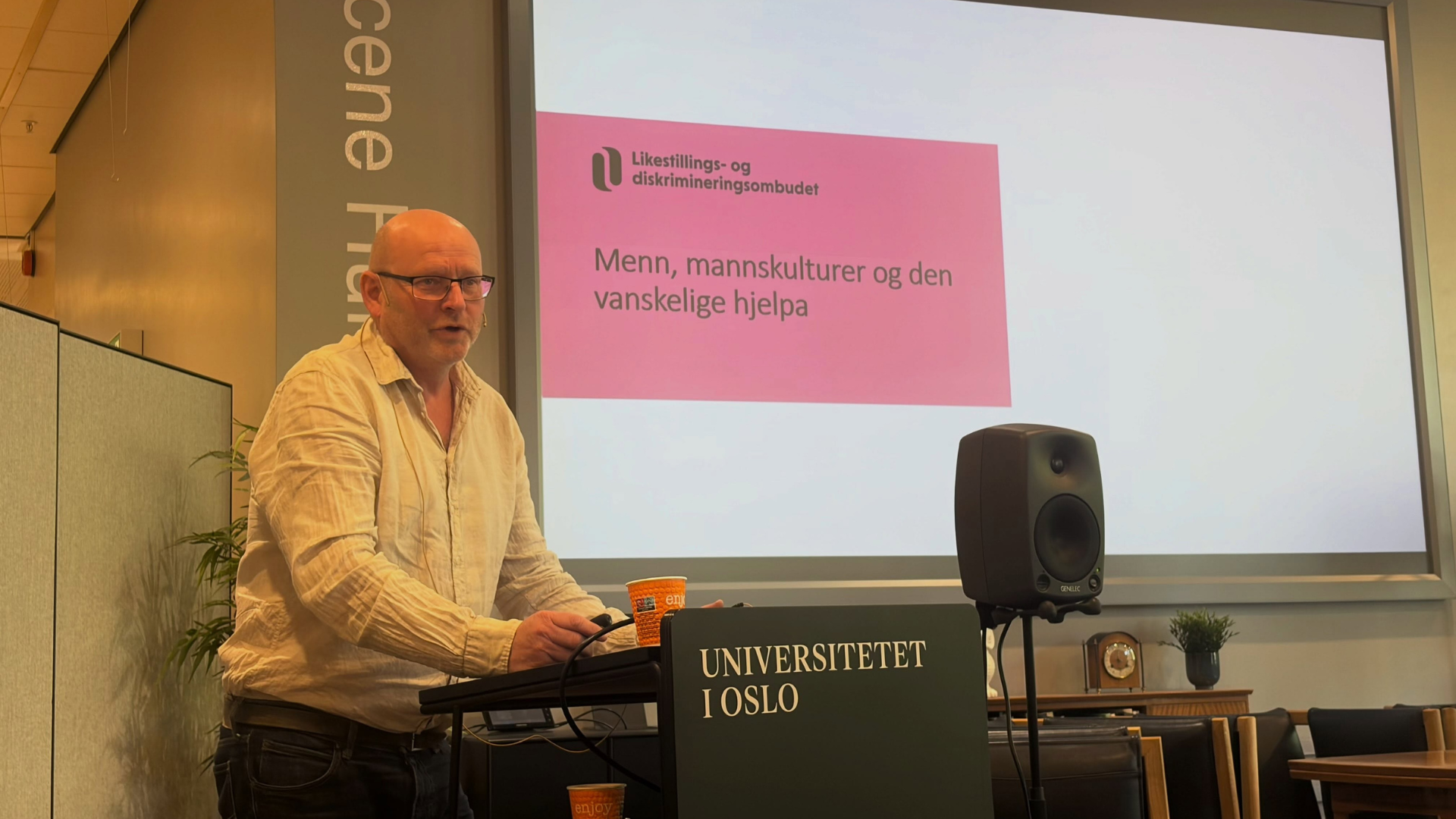
Following a mini-lecture by Knut Oftung on how boys and men typically cope, or fail to cope, with their emotions, there was a discussion on how to address suicidal thoughts in oneself and others.
Pay attention to yourself and those close to you. Have the courage to ask, have the courage to share.
Hanne Solheim from unge LEVE encouraged asking questions about suicide, as it can be a relief to be asked and can foster a needed sense of closeness.
- Many hesitate to ask because they are afraid of the answer, or fear being a burden. Solheim is clear that it is completely okay to be intrusive when a life is on the line.
Knut Oftung emphasized that the language used in mental health services does not always resonate with men facing mental health challenges.
- When the criteria for seeking help are described as feeling sad or crying a lot, many men do not recognize themselves. Health care services could achieve a better connection if they instead asked about symptoms like anger or high alcohol consumption
Aslak Alhassan spoke about the value of taking the initiative to create social spaces for meaningful conversations—for example, going for walks together.
Services for those who are struggling
Livslosen was present and talked about what they offer. Livslosen is a nationwide service for anyone going through a life crisis and experiencing suicidal thoughts. You can stay with them for up to five days, and the goal is to give you a breathing space and support to move forward in life. During your stay, you will be offered conversations, activities, shared meals, and an inclusive community with staff, volunteers, and other guests.
The stay is voluntary, free of charge, and open every day of the year. Livslosen is not a clinical health service and therefore does not require a referral. They do not keep medical records, and you can call their 24/7 helpline yourself to request a place. Everyone at Livslosen is bound by confidentiality.
Do you need someone to talk to?
- Immediate danger of suicide? Call 113 if there is an immediate danger to life and health. Call the out-of-hours medical service (legevakt) at 116 117 for urgent help.
- LEVE: 22 36 17 00 (weekdays 9 AM–3 PM) or email post@leve.no
- Livslosen: 45 84 54 63 (available 24/7) or email livslosen@lovisenberg.no
- Mental Helse: 116 123 (available 24/7)
- Kirkens SOS: 22 40 00 40 (available 24/7)